



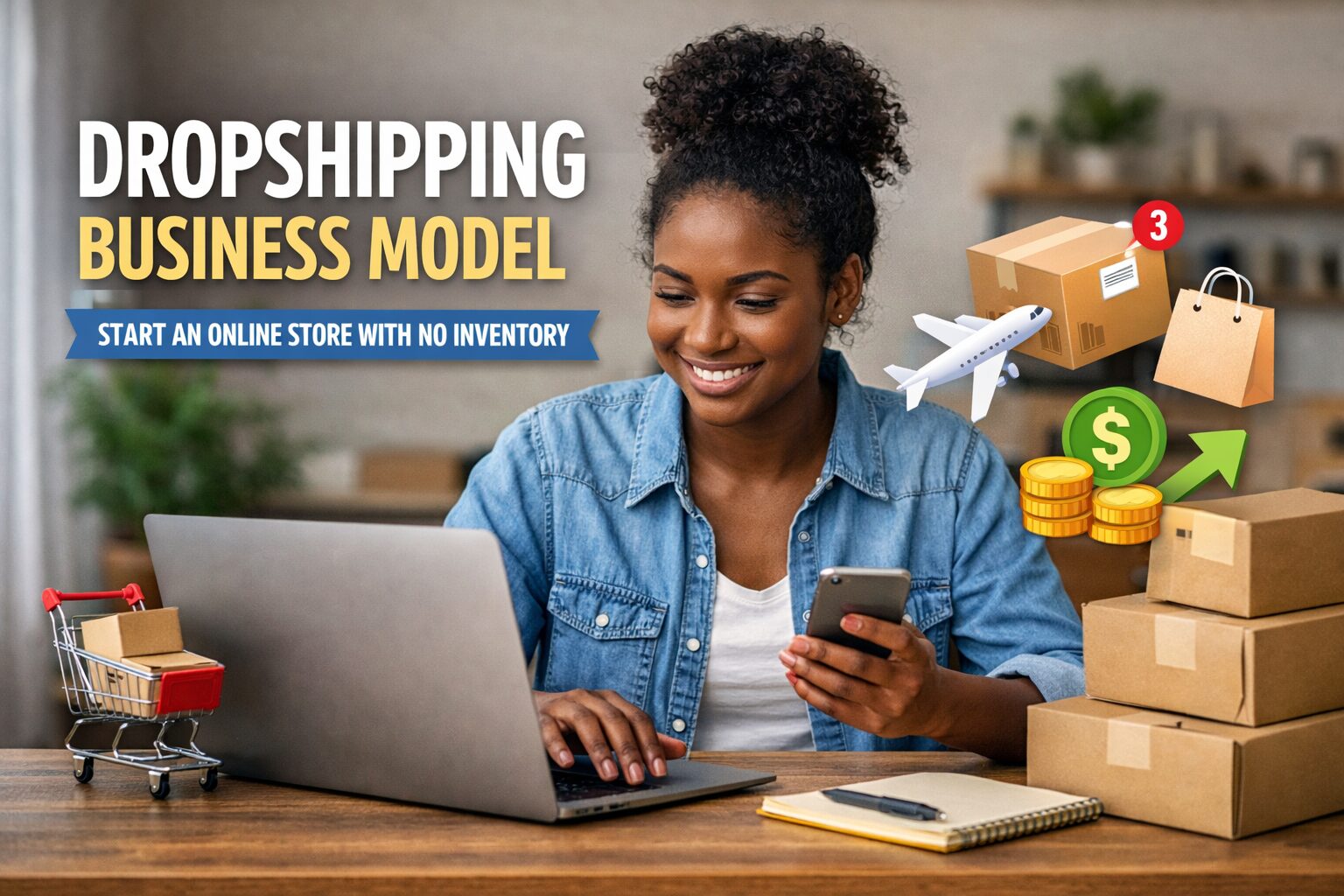
Starting an online business used to require large investment, storage space, and complex logistics. Today, the dropshipping business model has changed that reality.
Dropshipping allows anyone to sell products online without buying inventory upfront. Instead of stocking goods, you act as the bridge between customers and suppliers. When a customer places an order, the supplier ships the product directly to them while you keep the profit margin.
For beginners, busy professionals, students, and people learning digital skills from scratch, dropshipping offers one of the simplest entry points into e-commerce.
This guide explains how the dropshipping business model works, why it attracts so many new entrepreneurs, its advantages and limitations, and how you can start your own store step by step.
What Is the Dropshipping Business Model?
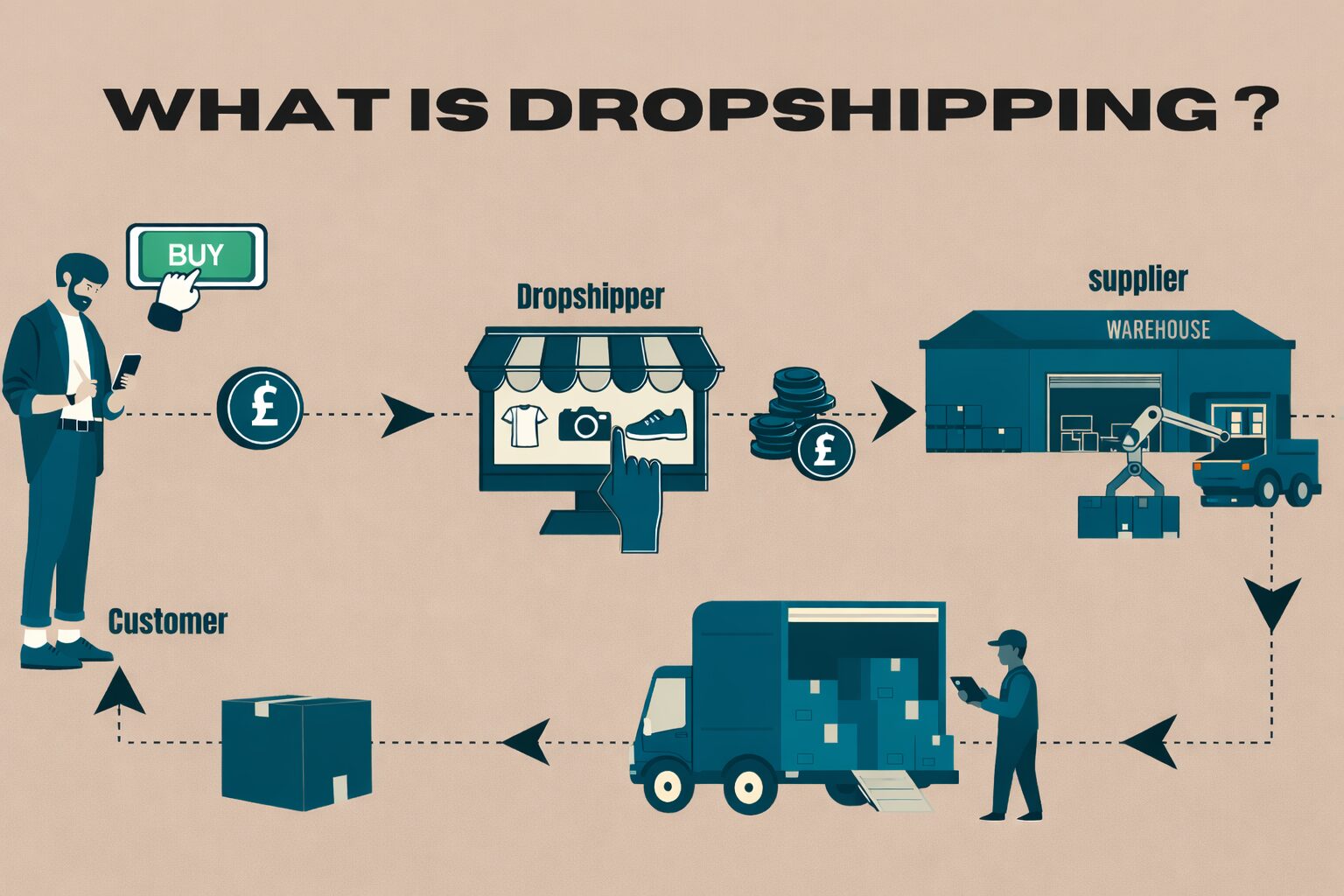
Dropshipping is a retail fulfilment method where the store owner does not keep products in stock. Instead, when a customer purchases an item, the order is forwarded to a supplier who ships the product directly to the customer.
This means you do not need:
- a warehouse
- packaging equipment
- shipping arrangements
- bulk inventory purchases
Your role becomes managing the store, attracting customers, and handling communication.
The supplier manages:
- storage
- packing
- shipping
- inventory availability
You earn the difference between the supplier price and your selling price.
Note: You can do automated dropshipping on ebay using HGR
How Dropshipping Works Step by Step
To understand the model clearly, imagine running an online shop without touching any products.
Here is the typical workflow:
Step 1: Customer visits your store
Someone finds your product through TikTok, Google, or social media and places an order.
Step 2: Order goes to supplier
Your system automatically sends the order details to your supplier.
Step 3: Supplier prepares the product
The supplier picks, packs, and labels the item.
Step 4: Supplier ships directly to customer
The product arrives at the customer’s address.
Step 5: You keep the profit margin
Your income is the difference between your selling price and supplier cost.
This structure allows you to run a business from home or even from your phone.
Why Dropshipping Has Become So Popular
The dropshipping model has gained global attention because it removes traditional barriers to starting a business.
Instead of investing thousands upfront, beginners can test ideas with minimal risk.
Key reasons people choose dropshipping include:
Low startup costs
Traditional retail requires buying inventory before making sales.
Dropshipping removes this requirement entirely.
You only purchase products after customers pay you.
No warehouse required
Storage costs can destroy early businesses.
Dropshipping eliminates storage responsibility completely.
Flexible location
You can run your store from anywhere with internet access.
Many dropshippers operate fully remotely.
Access to global suppliers
Instead of relying on local wholesalers, you can source products internationally.
This increases product variety and opportunity.
Who Should Consider Starting a Dropshipping Business?
Dropshipping is especially suitable for:
- beginners learning online business
- busy parents building side income
- students exploring entrepreneurship
- professionals testing business ideas
- creators building digital income streams
Because the risk level is lower than traditional retail, it is ideal for first-time entrepreneurs.
The Core Roles Inside a Dropshipping Business
Every dropshipping business includes three main participants:
The customer
The buyer purchases products from your store.
The retailer (you)
You manage the online store and customer relationship.
The supplier
The supplier stores inventory and ships products directly to customers.
Understanding this relationship helps you operate your business more confidently.
Advantages of the Dropshipping Business Model
Dropshipping offers several benefits that explain why many beginners choose it as their first online business.
Minimal investment required
You do not need to buy products in bulk.
This dramatically reduces startup risk.
Many stores begin with only:
- a domain name
- store platform subscription
- product sourcing tools
Easy to test business ideas
You can try different product categories quickly.
If one niche fails, switching to another is simple.
Large product selection
You can offer hundreds of items without holding stock.
Suppliers manage inventory availability.
Scalable structure
Because suppliers handle fulfilment, your store can grow without needing warehouse expansion.
Scaling becomes easier compared to physical retail.
Remote business management
Dropshipping can be operated from a laptop or smartphone.
This makes it ideal for people learning digital skills while working full-time jobs.
Disadvantages of Dropshipping You Must Understand
Although dropshipping looks simple, it still requires strategy and effort.
Understanding the challenges early helps you succeed faster.
Lower profit margins
Since suppliers handle logistics, your profit per product may be smaller.
Strong branding and marketing improve margins.
Supplier dependency
Your reputation depends on supplier performance.
Late shipping affects customer satisfaction.
High competition
Many beginners choose dropshipping because entry barriers are low.
Standing out requires differentiation.
Limited product control
You do not physically inspect items before customers receive them.
This makes supplier selection critical.
Types of Dropshipping Business Models
Not all dropshipping stores operate the same way.
Understanding different structures helps you choose the right strategy.
Single supplier model
You work with one supplier who fulfils all orders.
Benefits include:
- easier communication
- simplified operations
- faster setup
However, product variety may be limited.
Multiple supplier model
You partner with several suppliers.
Advantages include:
- wider product range
- flexible sourcing options
- stronger market positioning
Challenges include managing shipping timelines across suppliers.
Custom product dropshipping
Instead of reselling existing products, you design customised items.
Examples include:
- personalised mugs
- branded clothing
- printed planners
This approach often increases profit margins.
Choosing the Right Dropshipping Niche
Your niche determines whether your store succeeds.
Instead of selling everything, focus on solving a specific problem for a specific audience.
Good niches usually:
- solve everyday problems
- target passionate communities
- include repeat-purchase items
- avoid fragile shipping risks
Examples include:
- home organisation
- pet accessories
- fitness tools
- beauty storage solutions
- baby essentials
Selecting the right niche builds a stronger foundation.
How to Find Reliable Dropshipping Suppliers
Supplier reliability directly affects customer satisfaction.
Always research suppliers carefully before adding products to your store.
Important steps include:
Checking reviews
Look at seller ratings on supplier platforms.
Ordering sample products
Testing items helps confirm quality.
Evaluating shipping times
Customers expect predictable delivery timelines.
Confirming return policies
Clear policies protect your business reputation.
Platforms like AliExpress and SaleHoo are commonly used starting points for beginners.
Ready to start?
Learn everything about Dropshipping
Join my community and get step-by-step guidance on dropshipping, digital skills, and building income online.
Setting Up Your Dropshipping Store Step by Step
Starting a dropshipping store follows a structured process.
Let’s walk through it clearly.
Step 1: Choose your niche
Focus on a product category with demand.
Avoid random product selection.
Step 2: Select an ecommerce platform
Popular beginner platforms include:
- Shopify
- WooCommerce
- eBay
Each platform helps you create a store without coding knowledge.
Step 3: Register your business or use personal ebay account
Depending on your country, you may need:
- business registration
- tax setup
- payment gateway approval
Legal structure protects your business long term.
Step 4: Build your storefront
Your store should include:
- homepage
- product pages
- contact page
- shipping policy
- refund policy
Clear structure improves customer trust.
Step 5: Add products
Import supplier products to your store.
Write strong product descriptions.
Avoid copying supplier text directly.
Step 6: Set pricing strategy
Your pricing must cover:
- supplier cost
- platform fees
- advertising
- profit margin
Balanced pricing ensures sustainability.
Branding Matters More Than Most Beginners Think
Many new dropshippers believe success depends only on product choice.
In reality, branding makes the biggest difference.
Strong branding includes:
- clear store identity
- consistent colours
- unique descriptions
- customer-focused messaging
Even when selling supplier products, branding builds trust.
Marketing Your Dropshipping Store
No store succeeds without traffic.
Marketing brings customers to your products.
Common beginner marketing strategies include:
Social media marketing
TikTok and Instagram help demonstrate products visually.
Short videos increase engagement.
Search engine optimisation (SEO)
Writing product-focused content improves Google visibility.
Organic traffic builds long-term growth.
Influencer partnerships
Creators introduce products to their audience.
This increases credibility quickly.
Paid advertising
Platforms include:
- Facebook Ads
- TikTok Ads
- Google Ads
Paid ads help test products faster.
Customer Service in Dropshipping
Even though suppliers handle shipping, customer relationships remain your responsibility.
Strong customer service includes:
- answering questions quickly
- managing returns clearly
- resolving complaints professionally
- communicating delivery updates
Customer trust creates repeat purchases.
Common Beginner Mistakes in Dropshipping
Avoiding mistakes saves time and money.
The most common errors include:
Choosing random products
Always research demand first.
Ignoring branding
Stores without identity struggle to convert visitors.
Using unreliable suppliers
Supplier quality affects your reputation.
Expecting instant success
Dropshipping still requires consistent effort.
Is Dropshipping Still Worth Starting Today?
Yes—but expectations must be realistic.
Dropshipping is not a shortcut to instant income.
Instead, it is a structured entry point into ecommerce.
Success depends on:
- product selection
- branding
- marketing consistency
- supplier reliability
- customer experience
When managed properly, dropshipping can become a strong stepping-stone into larger online business opportunities.
Scaling Beyond Your First Dropshipping Store
Once your first store works, growth becomes easier.
You can expand by:
- adding complementary products
- building a branded niche store
- launching private-label versions
- creating digital products alongside physical items
Many entrepreneurs start with dropshipping and later build full ecommerce brands.
How Dropshipping Fits Into a Modern Digital Income Strategy
Dropshipping works especially well when combined with other digital income streams.
For example:
- affiliate marketing supports product testing
- content creation drives free traffic
- digital products increase profit margins
- personal branding builds trust faster
This combination creates a stronger long-term business model.
Final Thoughts: Should You Start a Dropshipping Business?
Dropshipping remains one of the most accessible online business models available today.
It removes the biggest barriers that normally stop beginners:
inventory costs
shipping complexity
warehouse requirements
Instead, it allows you to focus on learning the most valuable digital skills:
product research
store building
marketing
customer experience
If approached strategically, dropshipping becomes more than just a business idea—it becomes a practical training ground for building real ecommerce capability.
And for many beginners, that first step changes everything.